
Last month, Seungtae Lee (DC7) had the opportunity to attend the Alzheimer’s Research UK London Science Day 2025. As a PhD student in the MITGEST Doctoral Network, Seungtae is investigating how aberrant lipid metabolism affects mitochondria. The event proved to be both inspiring and intellectually enriching.
The diversity of models being used to study dementia, including Alzheimer’s disease, was impressive. In addition to neurons, researchers are also investigating astrocytes, microglia, and other brain cell types, alongside tissue-based studies and sophisticated computational models. This multi-model approach is enabling researchers to study dementia from a wide range of perspectives.
The breadth of approaches and cutting-edge techniques used was equally remarkable. Presentations and posters spanned cellular mechanisms, protein biology, lipid metabolism, immune system dynamics, biomarker discovery, using high-resolution imaging, single-cell sequencing, proteomics, metabolomics, and advanced computational tools. In some cases, machine learning tools were utilised for risk prediction. Each contribution added a unique piece to the complex puzzle of dementia pathogenesis and potential intervention strategies.
For Seungtae, whose work focuses on mitochondria, the event was a powerful reminder of the importance of integrating knowledge across cell types, biological pathways, and methodological approaches. Thus, the London Science Day was much more than just a research update. It was a celebration of innovation, collaboration, and shared commitment to understanding and ultimately overcoming dementia. Seungtae left the event with renewed motivation and optimism for the future of the field.
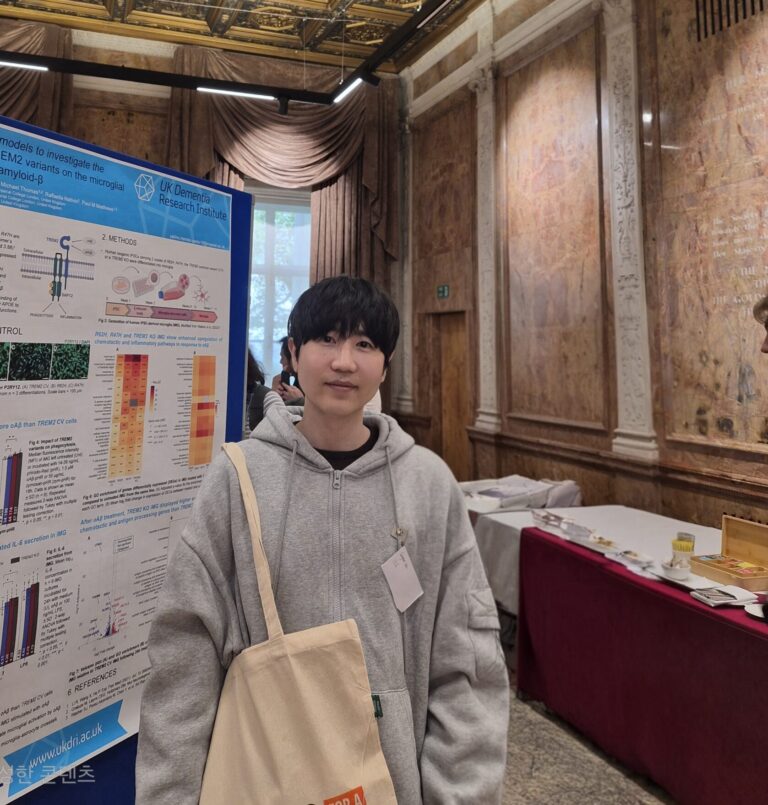

The news item was written by MITGEST DC7 Seungtae Lee.
Share the news: