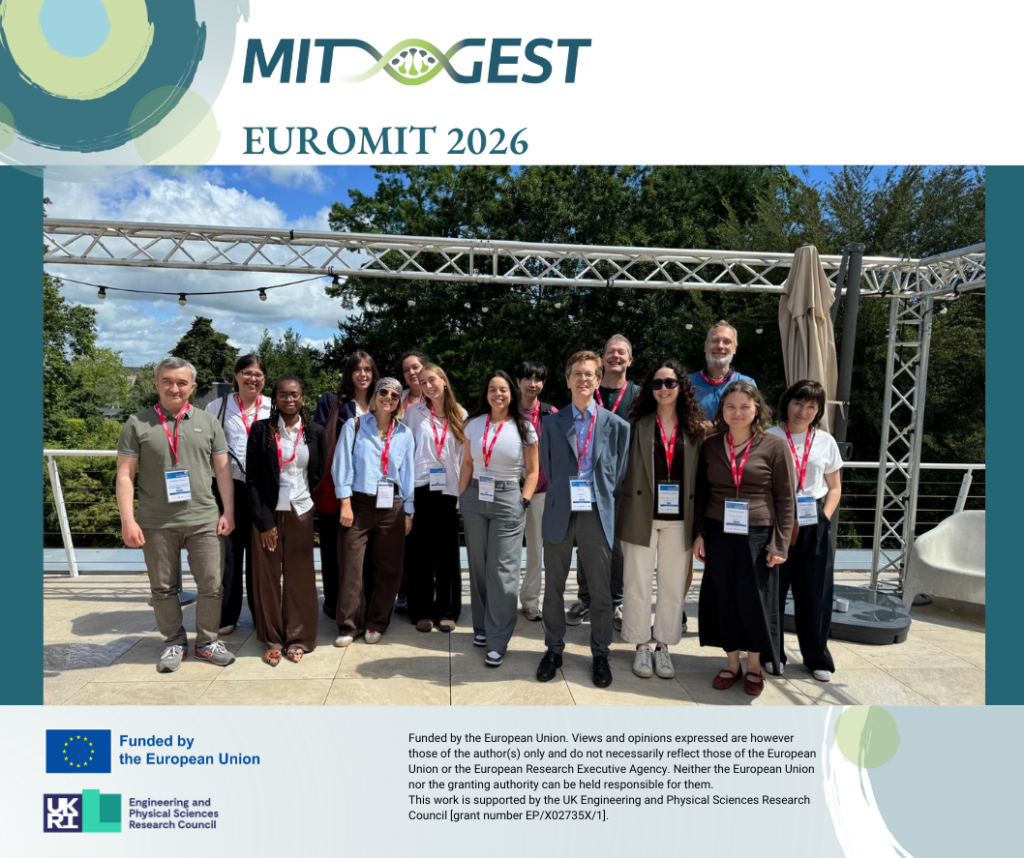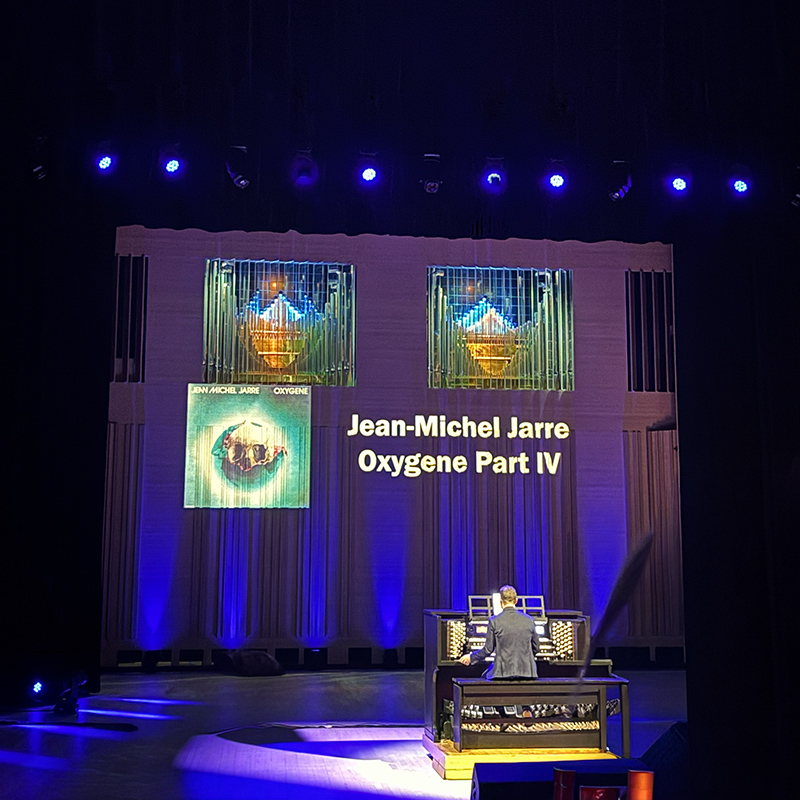
Nine MITGEST doctoral candidates (DCs) presented their latest research at EUROMIT 2026, bringing the project’s work on mitochondrial gene expression, genome maintenance, metabolic regulation and therapeutic development to an international scientific audience. The conference also marked the final network-wide event of the MITGEST project. The consortium used the opportunity to meet in person, exchange results generated across the doctoral projects and coordinate activities for the final months of the project.
Held from 31 May to 4 June 2026 in Angers, France, EUROMIT brought together scientists, clinicians and other stakeholders working across mitochondrial research and medicine. The conference programme addressed mitochondrial biology, disease mechanisms, diagnostics and emerging therapeutic approaches, while the poster sessions provided early-career researchers with an opportunity to present findings, receive expert feedback and build new scientific connections.
Research across the mitochondrial gene expression system
The nine MITGEST posters reflected the breadth of research conducted within the doctoral network, ranging from fundamental molecular mechanisms to disease models and potential therapeutic strategies.
Eve Harding, DC2, presented research on how mitochondrial DNA stability alters communication between mitochondria and the nucleus through calcium homeostasis. Her work contributes to understanding how changes within mitochondria can influence wider cellular signalling processes. Dory Vergallo, DC3, addressed the complexities of newly synthesised mitochondrial RNA, while Maria Nino, DC4, presented an analytical approach using large-pore native gel electrophoresis to investigate mitochondrial gene expression. Together, these projects contribute new knowledge and methods for examining how mitochondrial RNA molecules are produced, processed and organised.
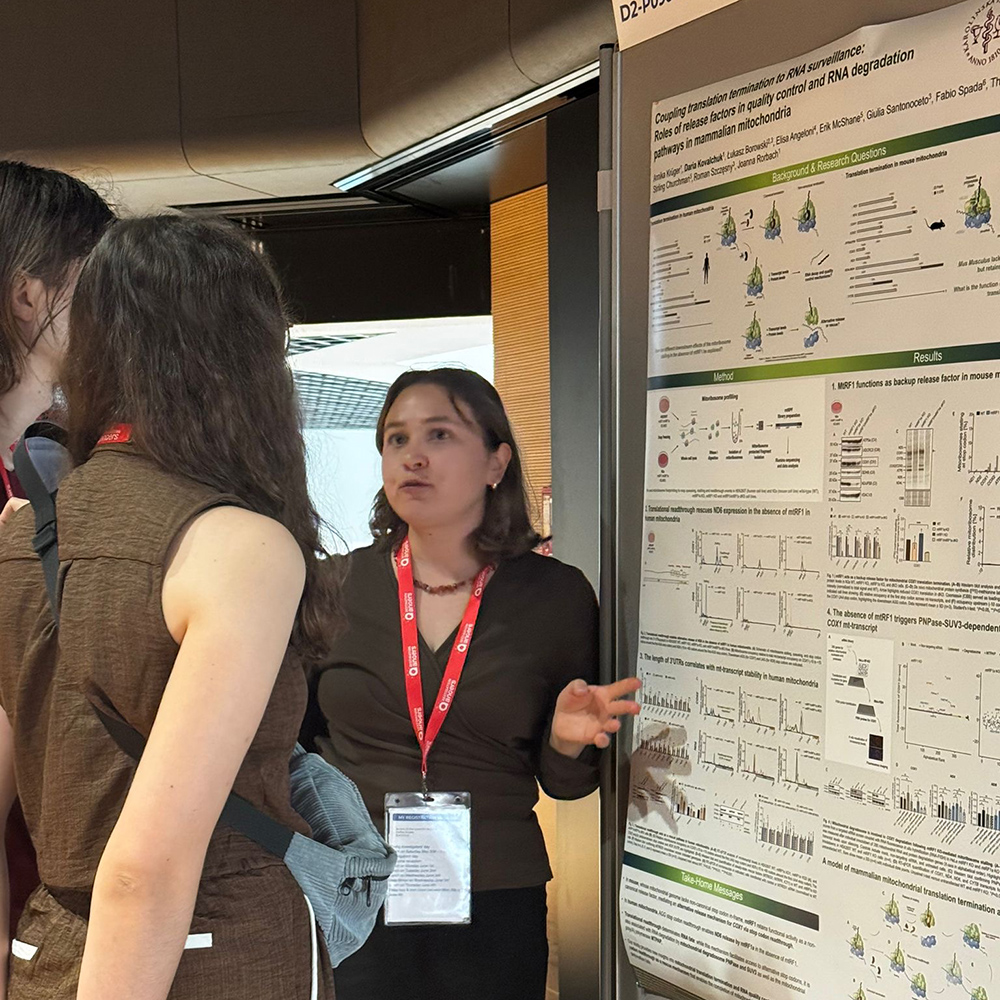
RNA surveillance and quality control were the focus of two further posters. Giulia Santonoceto, DC5, presented work on the identification of new factors and regulatory mechanisms involved in mitochondrial RNA surveillance. Daria Kovalchuk, DC6, investigated how translation termination is connected to RNA surveillance, including the roles of release factors in quality-control and RNA-degradation pathways in mammalian mitochondria.
The presentations closely reflect the individual research projects of the MITGEST doctoral candidates and the network’s shared objective of improving understanding of mitochondrial gene expression and its regulation.
Linking mitochondrial mechanisms with disease and therapeutic development
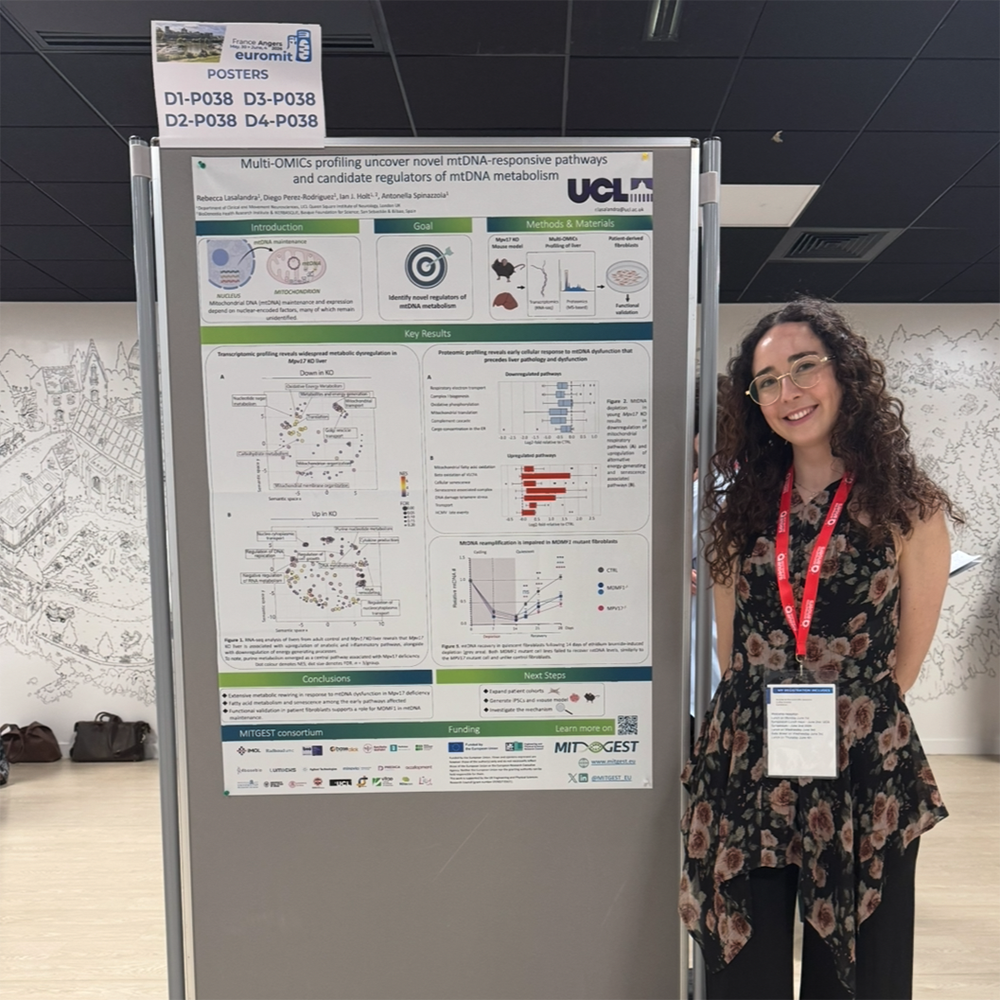
Other posters explored the wider consequences of mitochondrial dysfunction and possible routes towards therapeutic intervention. Seungtae Lee, DC7, presented findings on disrupted communication between mitochondria and cholesterol metabolism in a cellular model of Alzheimer’s disease. This work investigates how altered lipid metabolism may affect mitochondrial function in a neurodegenerative disease context. Rebecca Lasalandra, DC8, reported on the identification of a novel factor involved in mitochondrial DNA maintenance. Discovering previously unrecognised components of the mtDNA maintenance machinery can help explain the origins of mitochondrial genome instability and its contribution to disease.
Moving towards therapeutic application, Melisa Süner, DC9, presented a new strategy for targeting nucleic acid-based drugs to mitochondrial RNA. Targeted delivery remains a major challenge in developing treatments that act directly on mitochondrial genetic processes, making new delivery strategies an important area of translational research. Finally, Angela Frimpong, DC11, presented in vivo research on how 2-deoxy-D-glucose augments mitochondria and remodels nutrient metabolism. Her work examines how manipulation of metabolic pathways can influence mitochondrial function at the organismal level.
Extending the reach through “science slams”
Presenting at EUROMIT enabled the DCs to discuss their findings with specialists working across mitochondrial biology and medicine. It also placed their research within wider scientific and clinical discussions, from fundamental discoveries in mitochondrial gene regulation to the development of new diagnostic and therapeutic approaches.
To extend the reach of the presented research beyond the conference audience, the doctoral candidates also recorded short, two- to three-minute video presentations of their posters in the form of science slams. The videos translate the key research questions, methods and emerging findings into concise and accessible formats and will be published on the MITGEST YouTube channel. This approach supports wider dissemination of the DCs’ work, enables continued access after the conference and helps engage wider audiences for potential uptake and future collaborations. Stay tuned to not miss out on MITGEST science slams.
A final network meeting and preparation for project completion
Beyond the scientific programme, EUROMIT provided an important setting for the MITGEST consortium to meet as a network for the final time before the project concludes. The partners and DCs reviewed progress across the individual research projects, shared results generated during the network and discussed how these findings contribute to the wider MITGEST objectives. The meeting also supported coordination of the remaining scientific, training, dissemination and reporting activities to be completed during the final months of the project. Bringing the consortium together alongside a major international mitochondrial conference enabled the DCs to place their work within the wider developments shaping the field, while also reflecting collectively on the scientific advances achieved within MITGEST.
As the MITGEST network enters its final months, the results presented at EUROMIT demonstrate the scientific progress achieved by the DCs and the value of collaboration across the consortium. The remaining project period will focus on completing the research, consolidating results and ensuring that the knowledge generated through MITGEST is shared with the wider scientific community.
Stay tuned to the MITGEST website and social media channels for the upcoming science slam videos and further updates as the project enters its final months.